Chaotic Systems: Odesa
About project
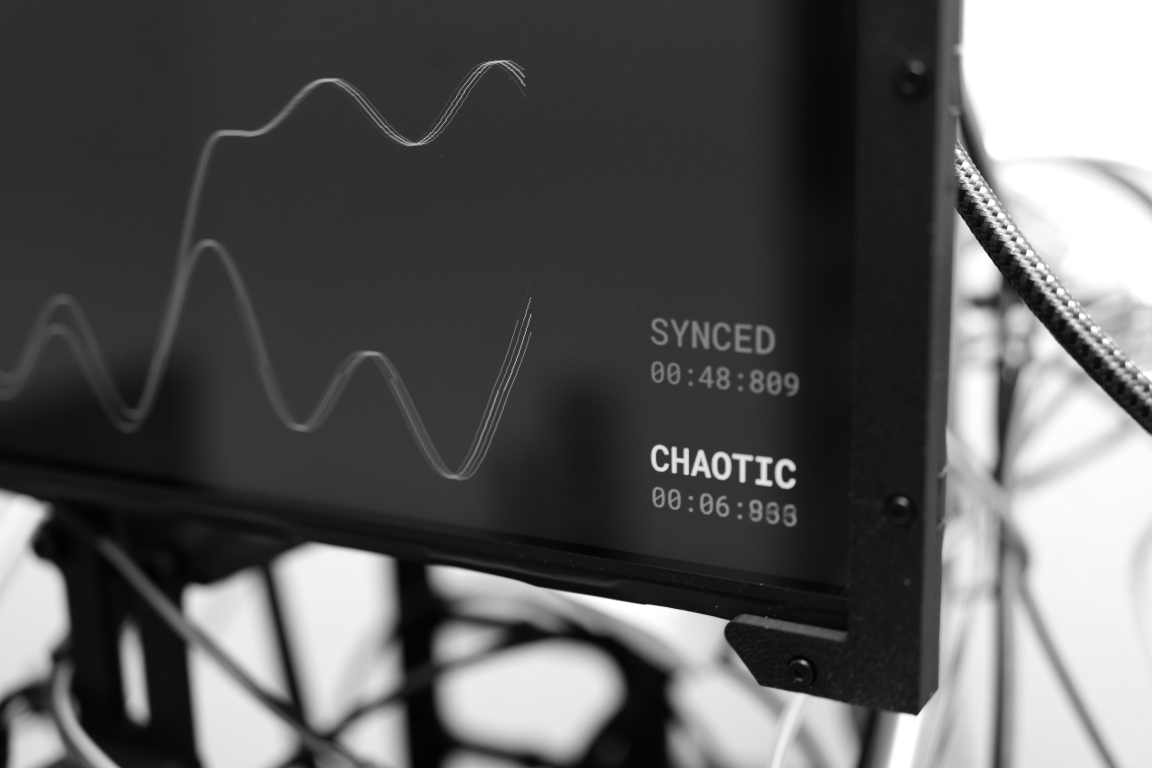
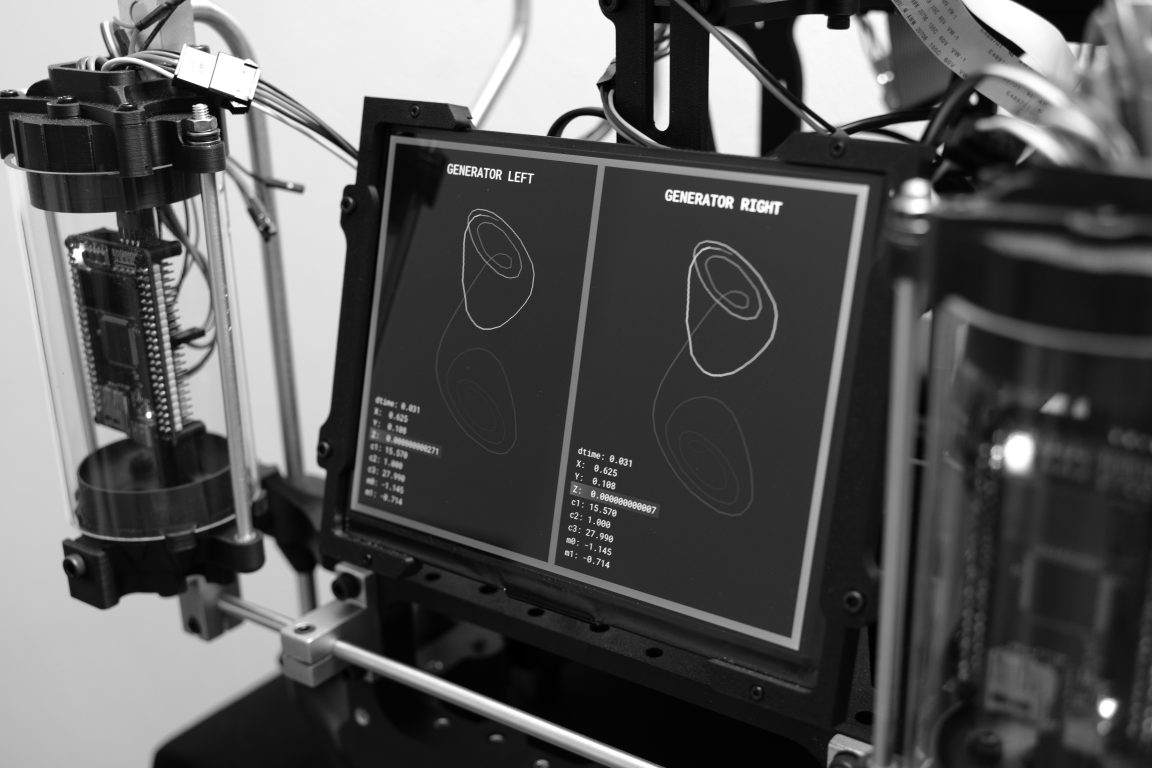
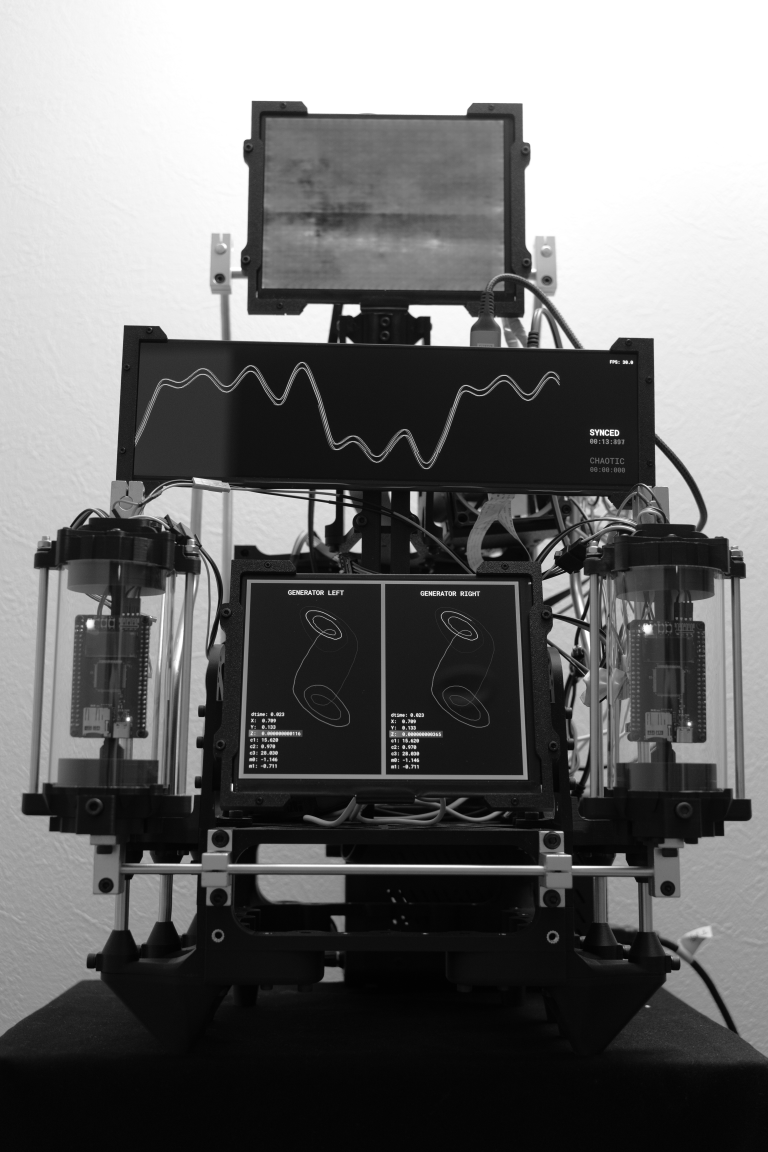
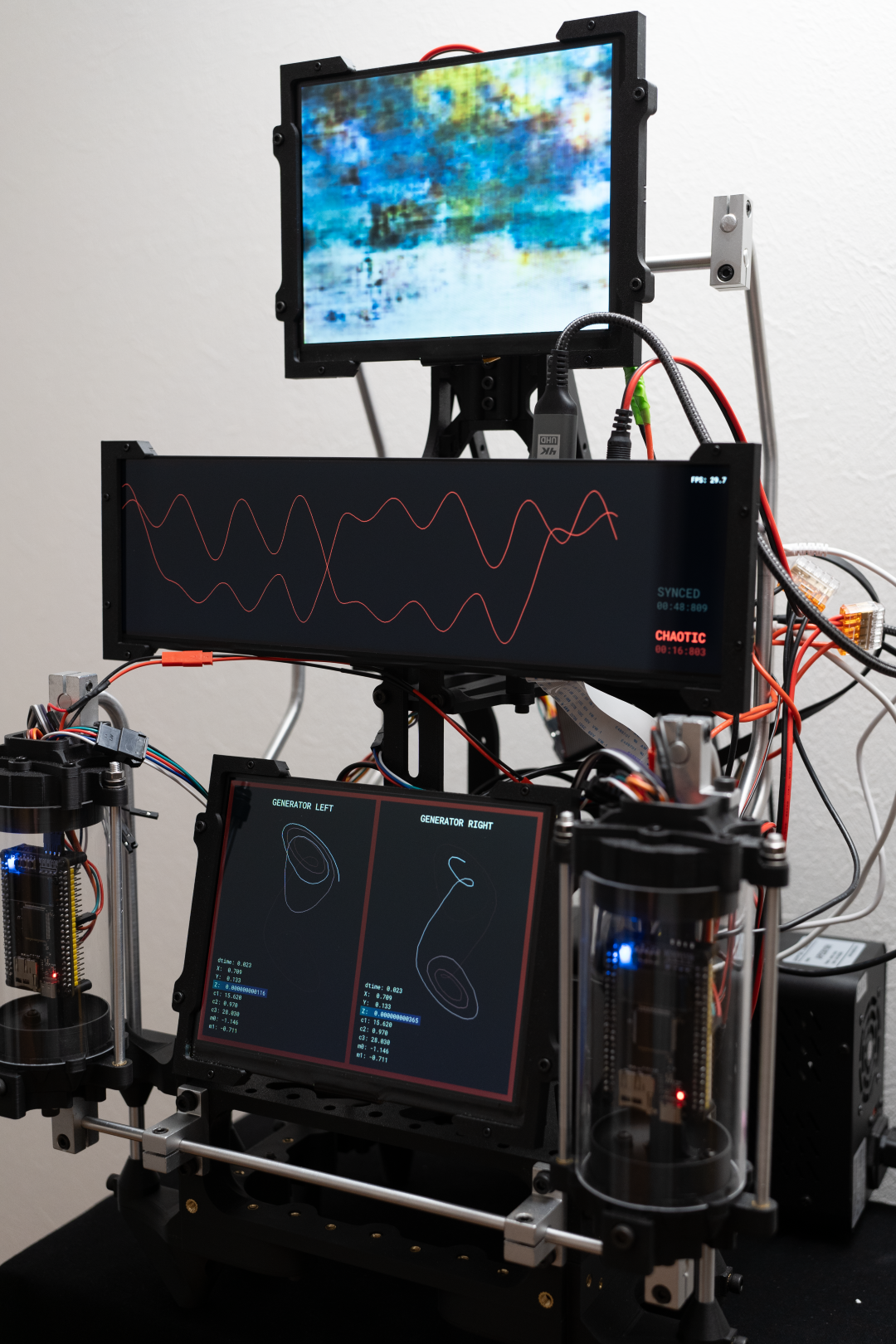
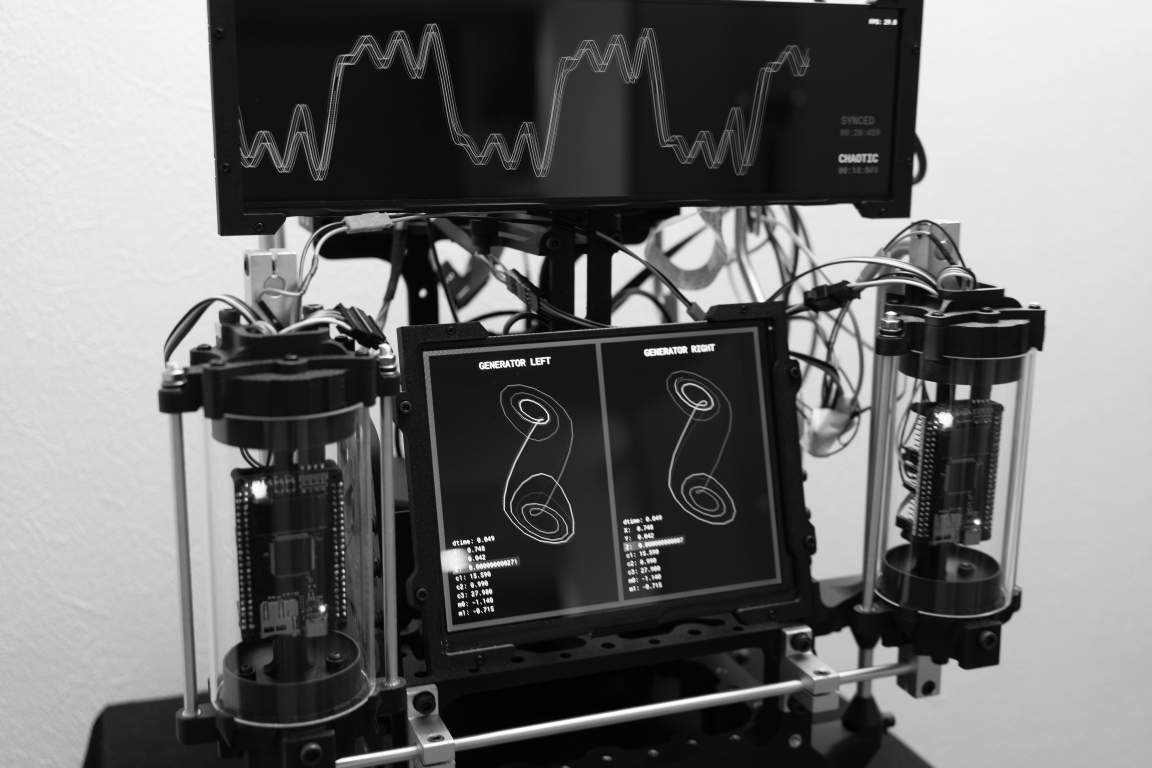
Chaotic Systems: Odesa is an installation exploring the unpredictability of dynamic systems through mathematics, AI, and real-time computation. Two synchronized Chua's circuits, solving differential equations, start with nearly identical initial conditions — except for an infinitesimal variation. Over time, this tiny difference leads to unpredictable divergence, illustrating the butterfly effect.
At the beginning of each cycle, a new set of starting parameters is generated randomly using a thermal noise source, and these values are identical for both systems — except for a minuscule, randomly assigned difference of 10⁻¹² in one parameter. This tiny variation eventually causes the systems to unpredictably diverge. When their accumulated difference reaches a threshold equal to the number of hours since 6:00 AM on February 24, 2022, the system resets and initiates a new cycle with a freshly generated set of synchronized parameters and another minor variation.
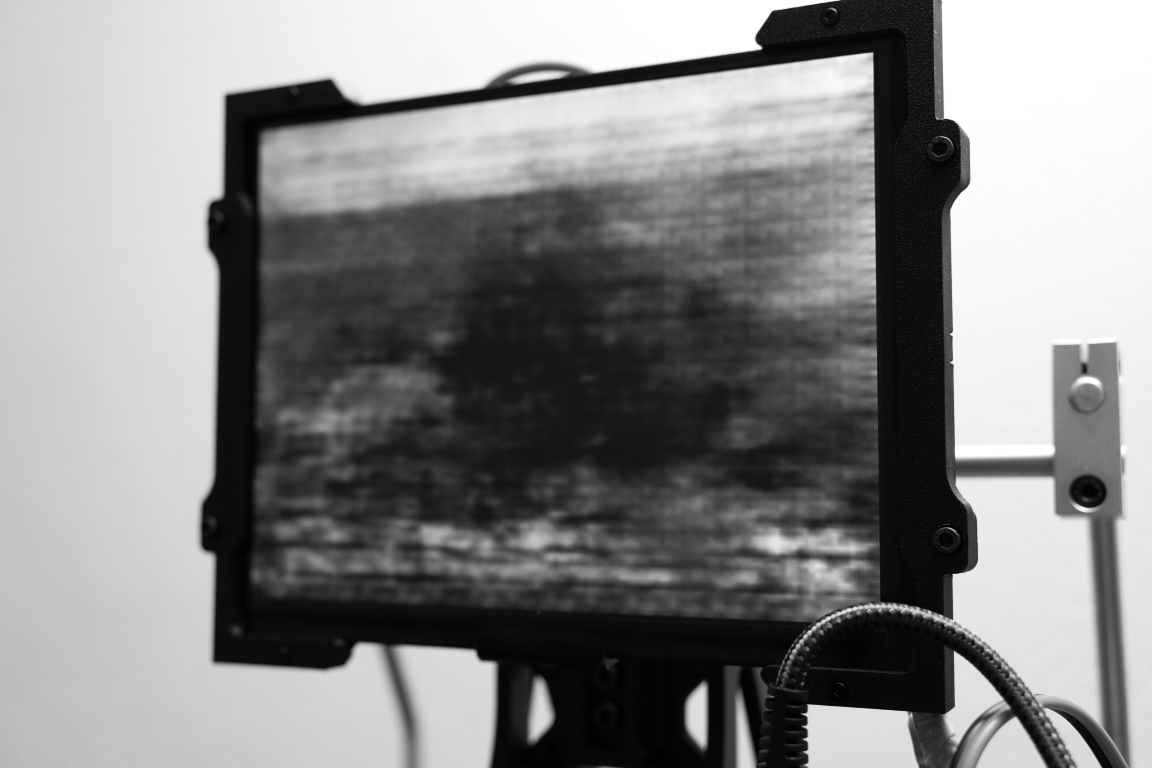
The system's instability directly influences a generative AI model (cGAN), trained on serene Odesa landscapes and historical visual data. As the divergence grows, the AI morphs imagery from calm to unsettling, creating an ever-evolving abstract composition. The work highlights how imperceptible changes can lead to drastically different outcomes, mirroring both natural and social dynamics.
WHY
One of the narratives in Russian propaganda refers to the tragic events in Odesa in 2014, when pro-Russian and pro-Ukrainian groups clashed on the streets. The unrest, fueled by provocations, escalated into violence, culminating in a fire at the Trade Unions House and multiple casualties. Propaganda dehumanizes the pro-Ukrainian side, ignoring the chaotic and unpredictable nature of mass social events.
This project explores the "butterfly effect," a concept introduced by mathematician Edward Lorenz, which describes how minor initial differences in chaotic systems lead to unpredictable outcomes. These systems symbolize alternate realities where even an insignificant deviation can lead to disorder.
By merging mathematics, AI, and an exploration of unpredictable events, the project examines how minor differences shape reality and how unpredictability is inherent in both natural and social systems.
Media files
Video
Full presentation of the installation exploring chaos theory and the butterfly effect through dual synchronized Chua's circuits.
Technical process overview showing the algorithm, neural network training, and hardware integration.
Technical description
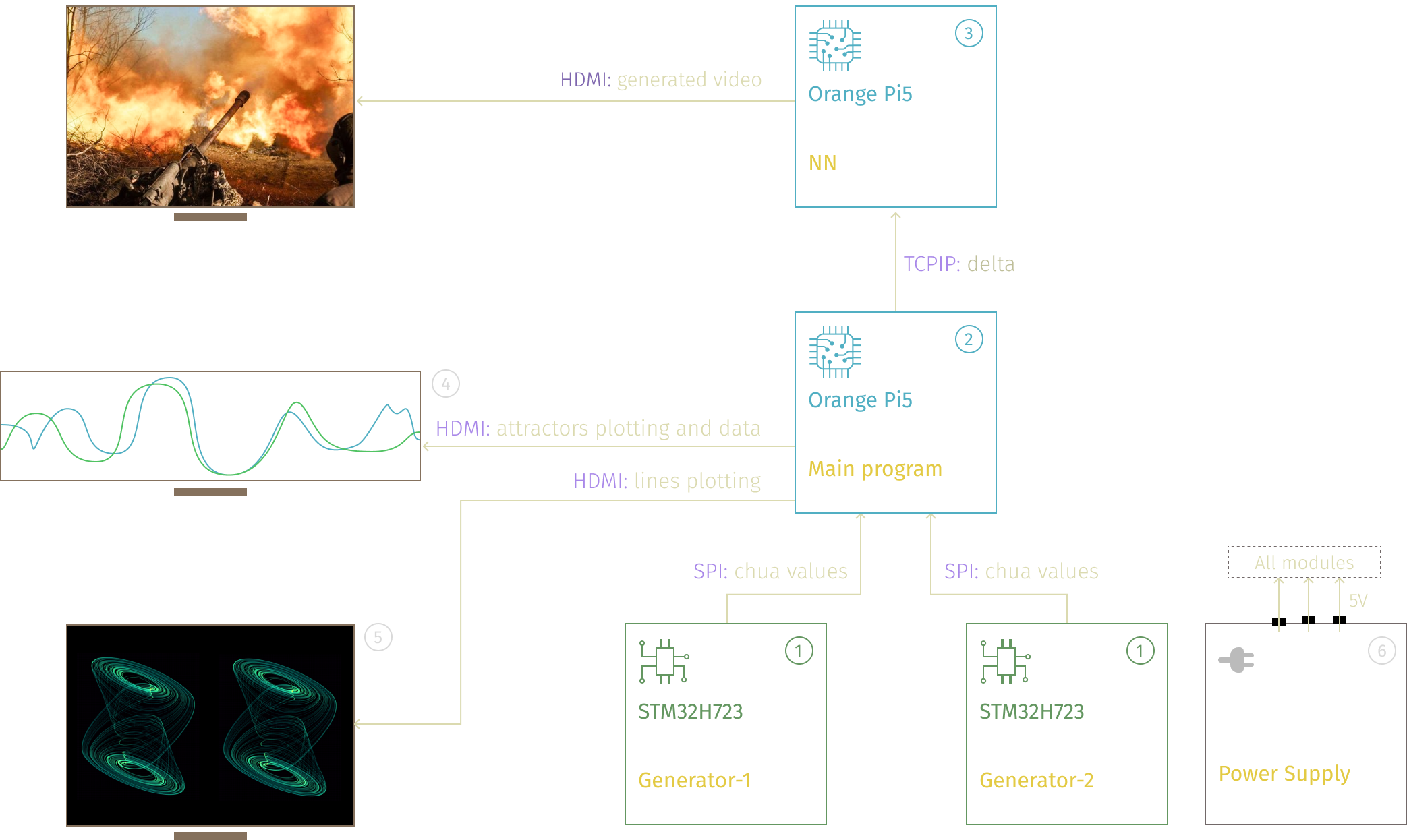
The installation consists of the following interconnected modules:
1. Thermal Noise Generator — produces true random numbers from hardware noise, used to seed initial conditions for both chaotic circuits.
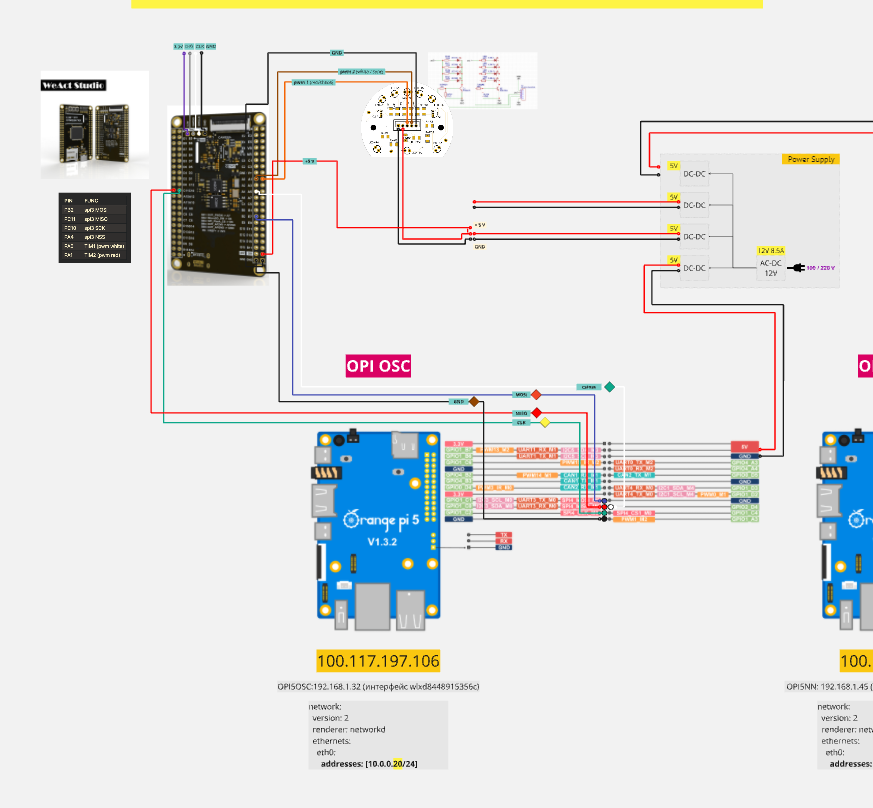
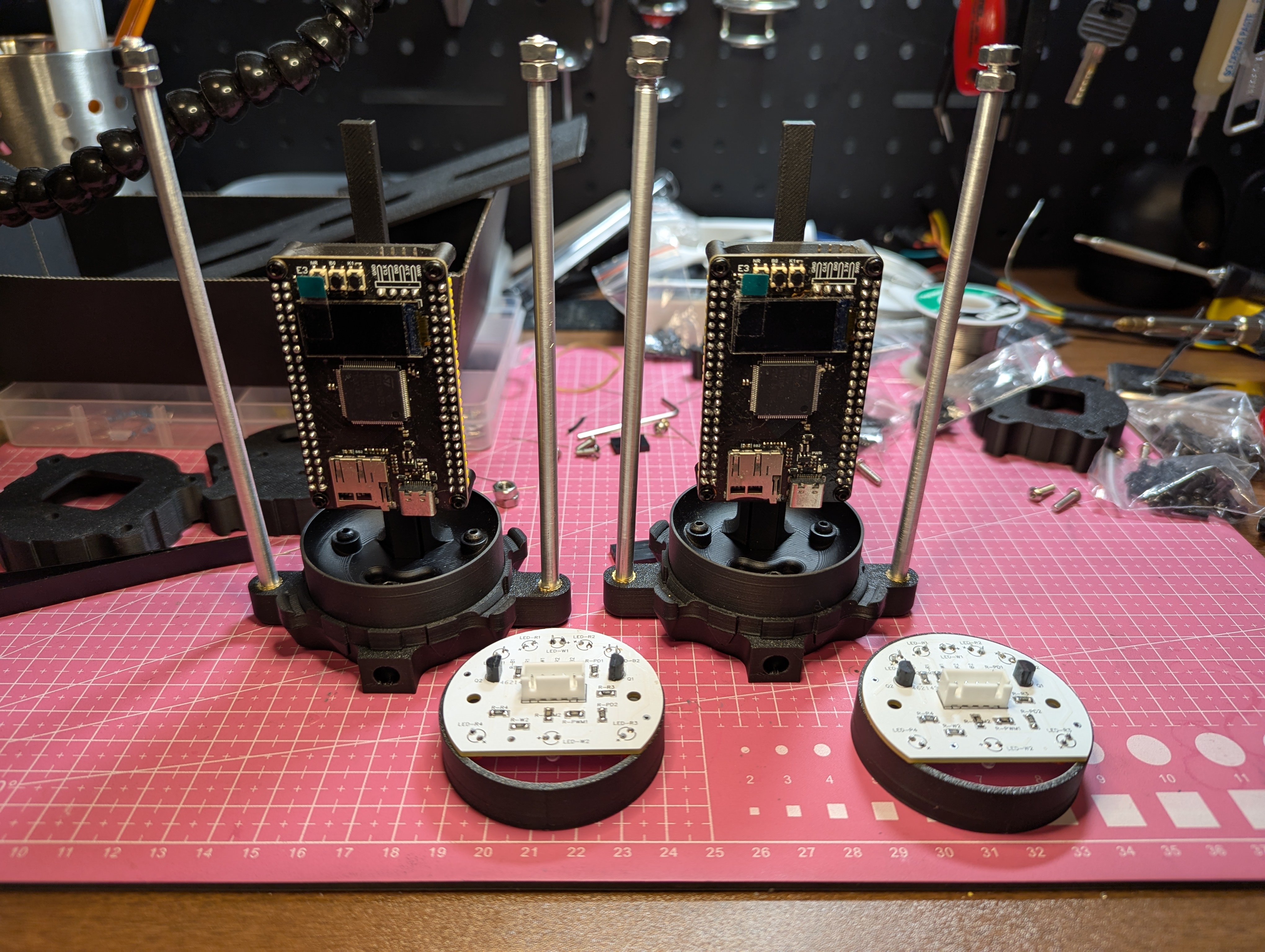
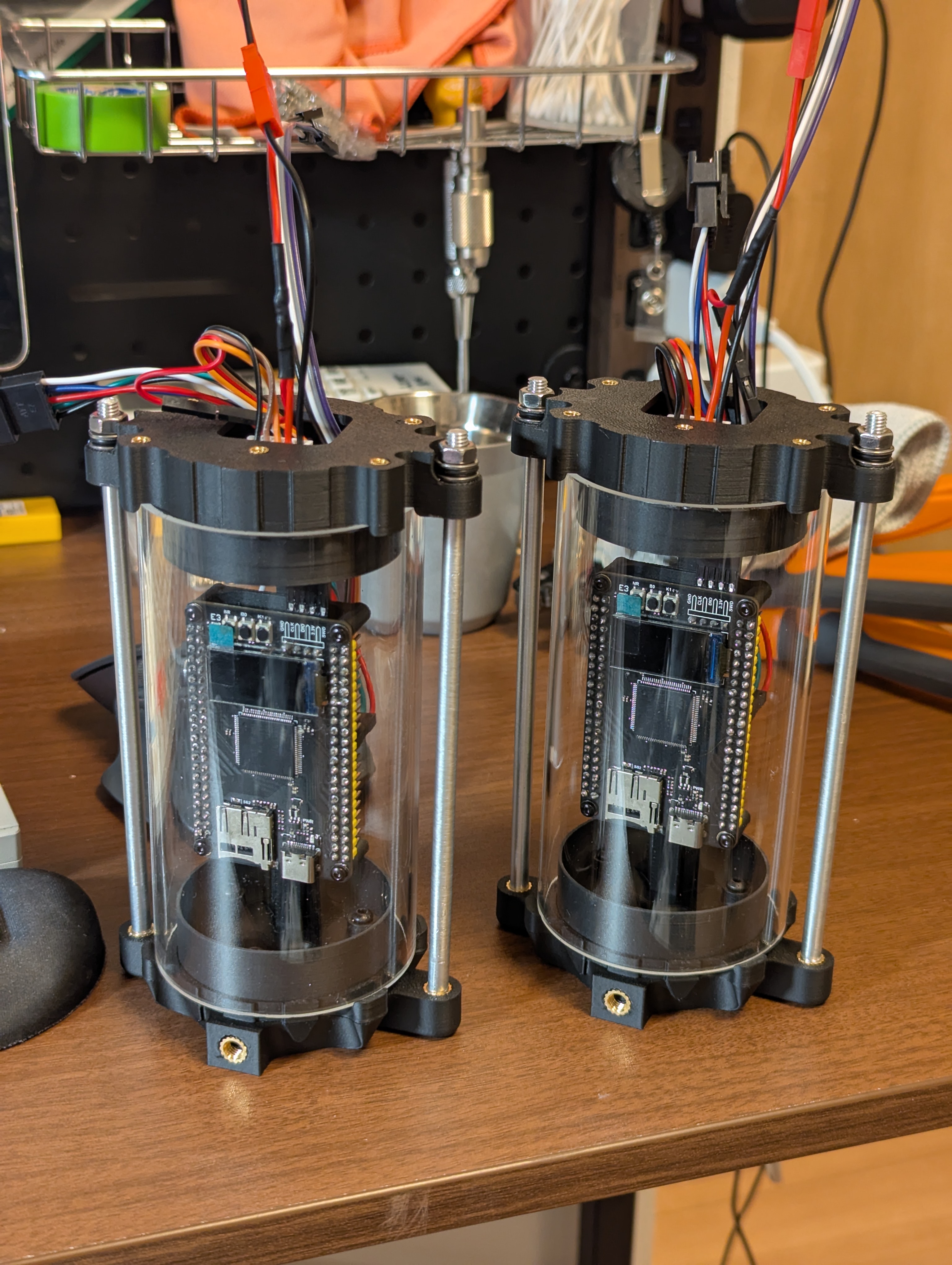
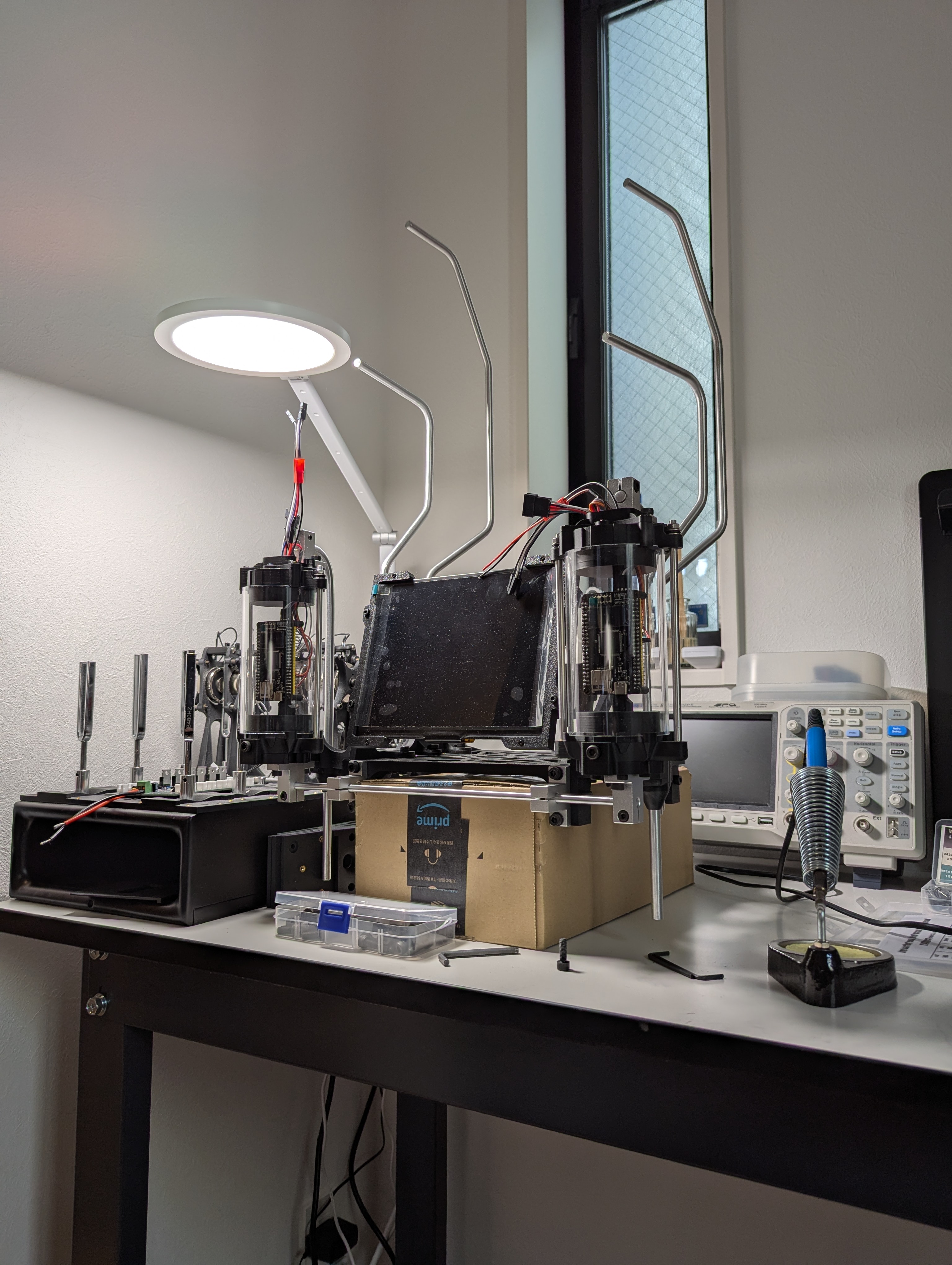
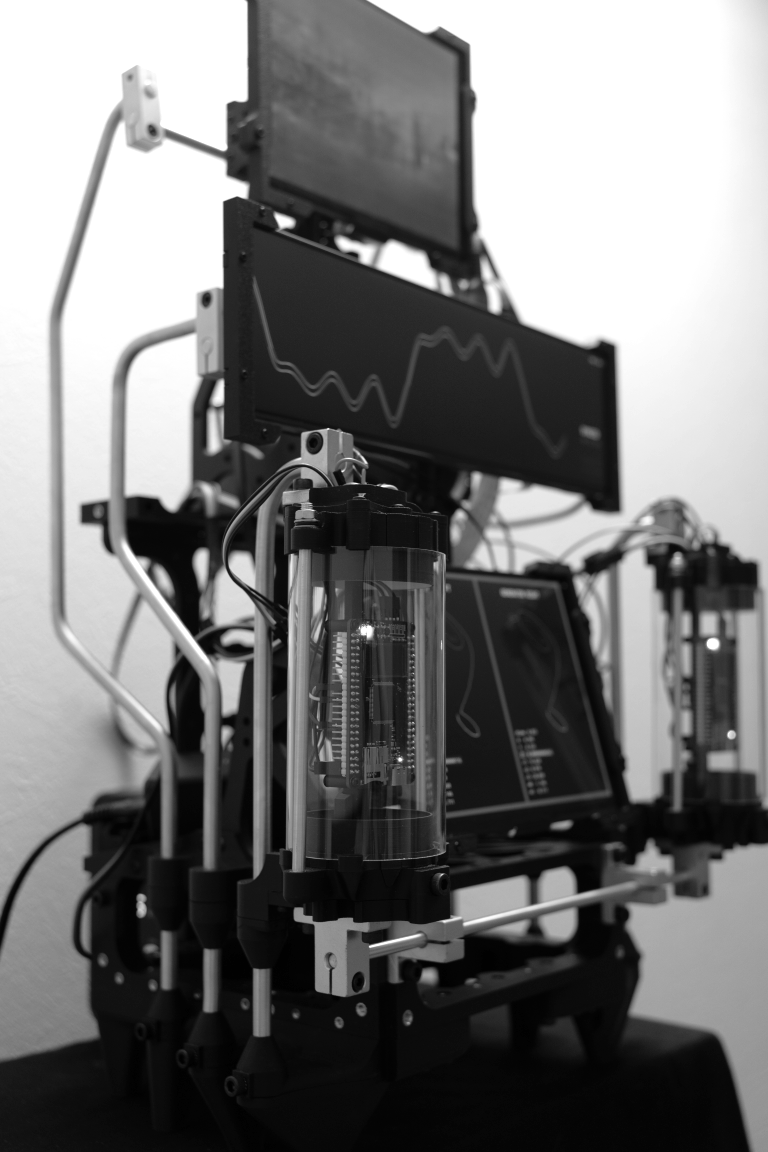
2. Chua's Circuit Solver (x2) — two STM32H723 microcontrollers independently compute Chua's circuit differential equations in real-time, starting from nearly identical parameters.
3. Divergence Monitor — continuously compares the states of both circuits, computing accumulated divergence and triggering a system reset when the threshold is reached.
4. Parameter Synchronizer — ensures both systems start each cycle with identical parameters except for the intentional 10⁻¹² variation in one variable.
5. Neural Network Engine — a conditional GAN (cGAN) running on Orange Pi 5, trained on Odesa landscapes and archival imagery, generates visuals driven by circuit divergence data.
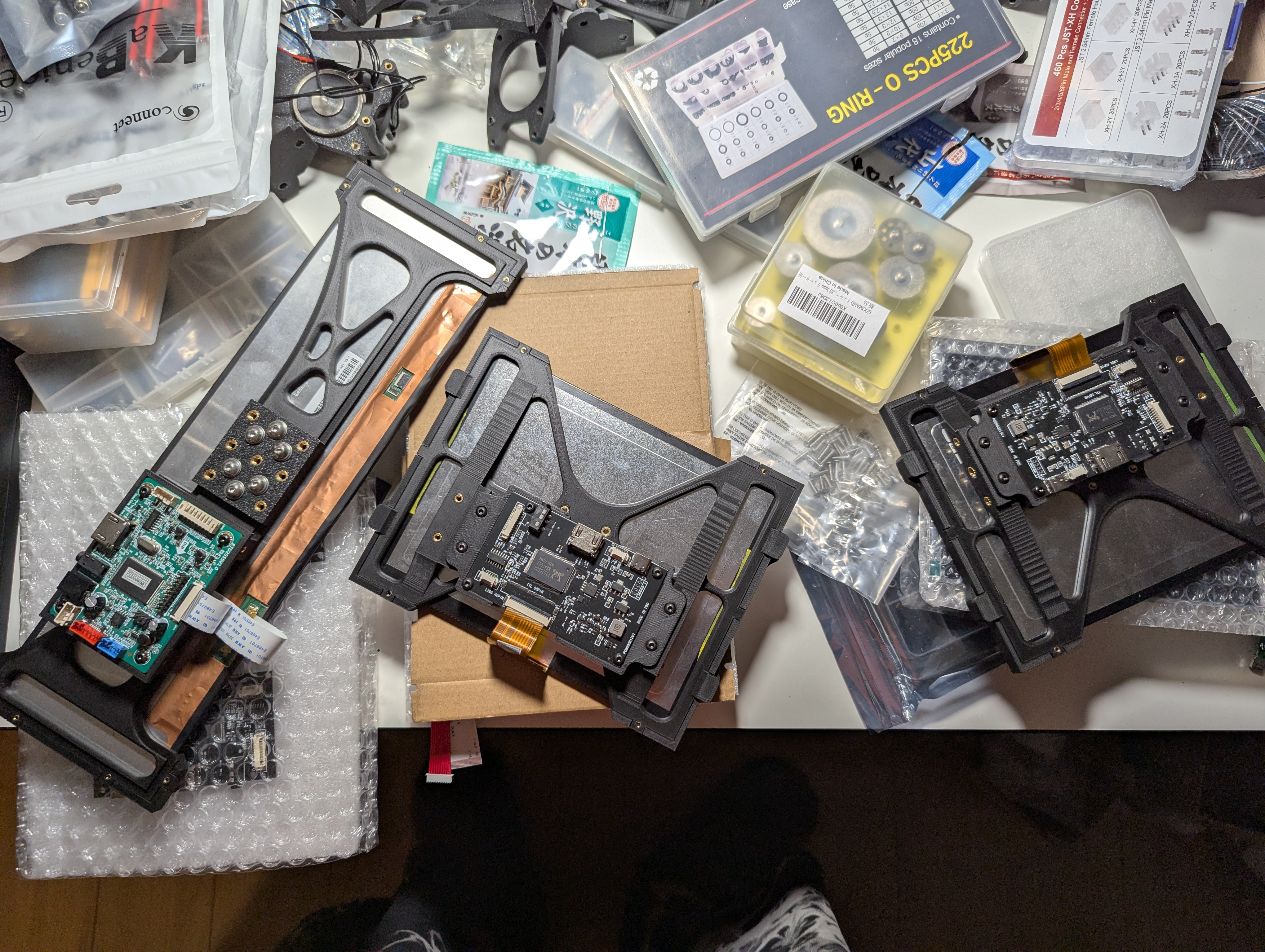
6. Display Controller — manages three LCD monitors showing the evolving generative imagery from the cGAN output.
7. Cycle Manager — orchestrates the overall timing: reset triggers, parameter regeneration, and display transitions between cycles.
8. Time Reference Module — calculates the divergence threshold based on hours elapsed since 6:00 AM, February 24, 2022, linking the system's behavior to a specific historical moment.
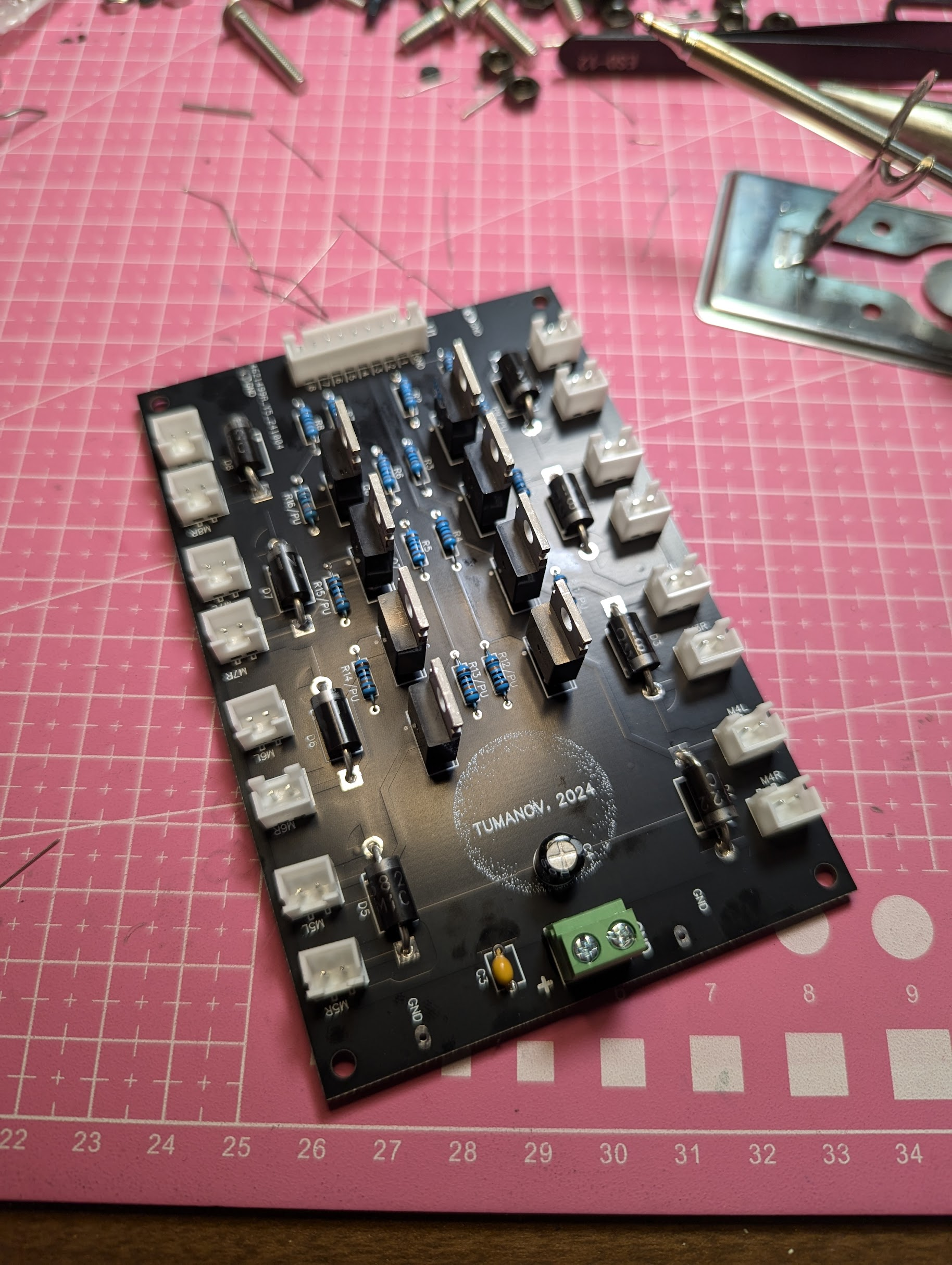
9. Custom PCB Interfaces (x2) — bridge analog circuit computation with digital processing, handling ADC conversion and data routing between STM32 and Orange Pi.
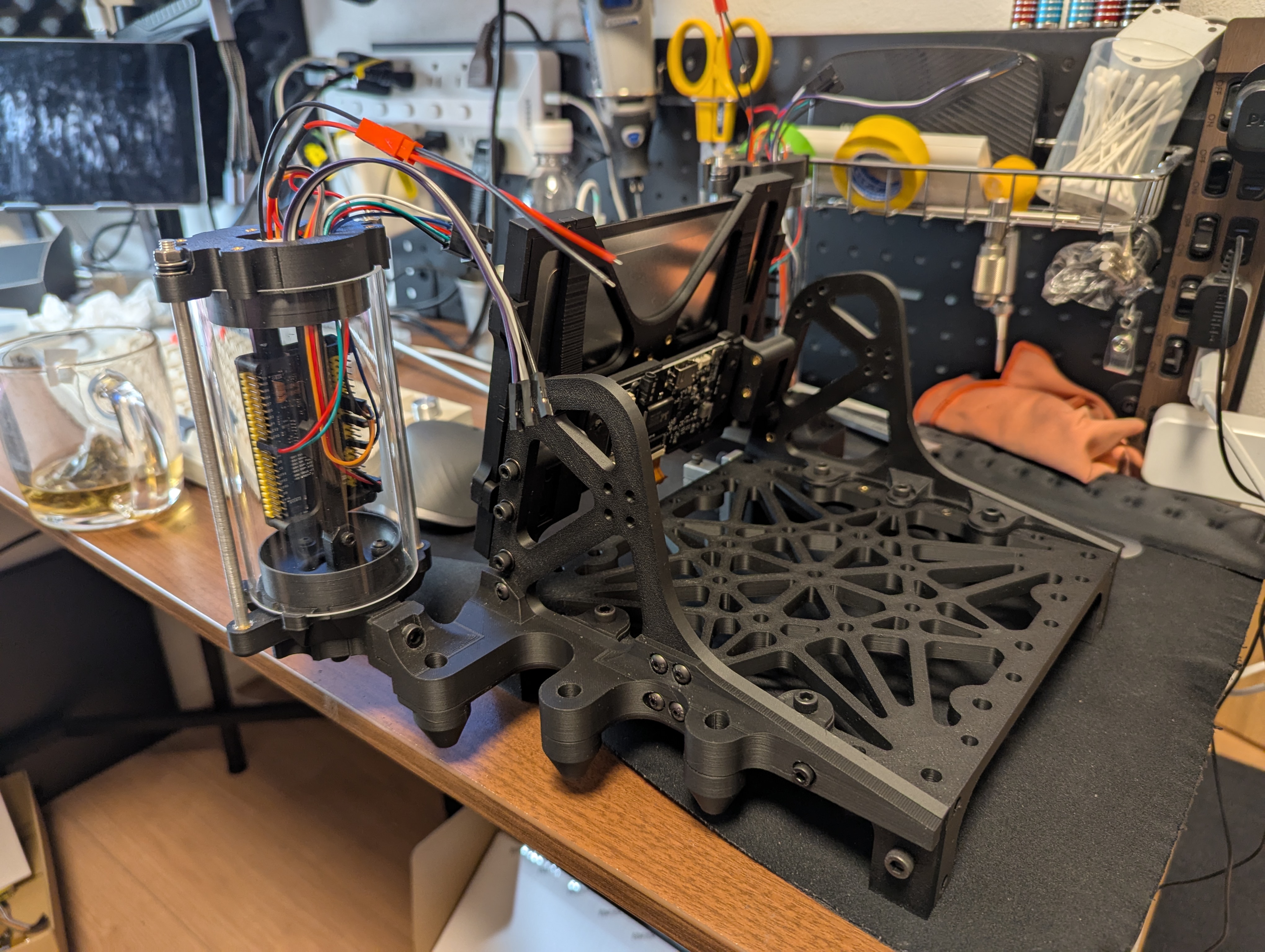
10. Aluminum Frame with 3D-Printed Components — the physical housing integrating all electronic modules into a unified sculptural form.
Software
- Linux OS (Orange Pi)
- Custom control software
- Custom conditional GAN-based neural network (cGAN)
Process